Buying case fans at HodlChip
Fans are an inexpensive way to make a PC cooler and quieter. Choose by:
- Size: use what your case and radiator support. 140 mm fans can move similar air to 120 mm fans at lower speed, so they are often quieter.
- Airflow or static pressure: airflow-tuned fans suit open case mounts; high static pressure fans push air through radiators, dense filters and mesh panels.
- Control: 4-pin PWM fans let the motherboard adjust speed with temperature. Some fan systems, such as Corsair iCUE LINK, daisy-chain to cut cable clutter but need the brand's own hub; the Connector filter shows which is which.
- Lighting: ARGB fans also need a 3-pin 5 V lighting header or controller; fans without RGB keep the build plain and the wiring simple.
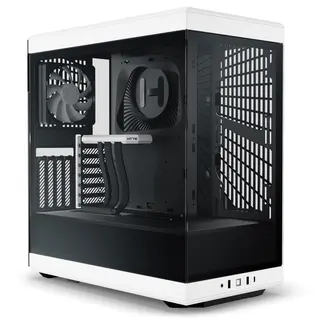
A multi-pack keeps speeds and looks consistent. For a typical mid tower, two or three front intakes and one rear exhaust is a sound start. Reverse-blade fans let bottom or side intakes pull air in while showing their front face. Need more headers? See fan & RGB controllers and the hubs and splitters in fan accessories; radiator sizes are listed under radiators.
Questions about case fans
Should I choose 120 mm or 140 mm fans?
Use the size your case or radiator supports. Where both fit, 140 mm fans can move the same air at lower speed and noise, while 120 mm fans fit more cases and radiators.
What is the difference between PWM and DC fans?
Both can be speed-controlled. 4-pin PWM fans receive a constant 12 V plus a control signal, which allows lower, more precise minimum speeds. 3-pin DC fans are controlled by varying the voltage, which some headers support and some do not.
Should case fans blow in or out?
Most builds use front or bottom fans as intakes and rear or top fans as exhausts, with slightly more intake than exhaust. This keeps positive pressure inside the case, so dust enters mainly through the filters.