
Sim racing setup guide (2026): wheel, pedals, rig and PC
A good sim racing setup starts with the wheel base and the pedals, then needs a rig stiff enough to hold them and a PC that keeps frame rates steady. This guide explains belt vs direct drive torque, wheel rims and quick releases, load-cell pedals, cockpits, and the PC and monitor setup you need in 2026.


On this page7 sections
The best way to build a sim racing setup is in this order: a direct drive wheel base with torque that suits your mounting (4–8 Nm on a desk or stand, 8–15 Nm for most cockpits), load-cell pedals, a rigid rig or wheel stand, then the display and the PC. Pedals do more for consistency than a few extra newton-metres of torque, and a rig that flexes wastes the detail your wheel base produces. The sections below explain each choice.
Belt vs direct drive wheel bases
The wheel base is the motor that turns the rim and produces force feedback: what the car's tyres and suspension are doing, delivered to your hands.
| Drive type | Typical peak torque | Feel | Mounting |
|---|---|---|---|
| Gear drive | About 2–3 Nm | Notchy, noticeable rattle at low speed | Desk clamp |
| Belt drive | About 3–6 Nm | Smoother than gears, slightly damped detail | Desk clamp or wheel stand |
| Entry direct drive | About 4–8 Nm | Direct, detailed, fast response | Desk clamp, wheel stand or rig |
| Mid-range direct drive | About 9–15 Nm | Strong and detailed, the sweet spot for many drivers | Rig recommended |
| High-end direct drive | About 16–32 Nm | Heavy, realistic steering with very fine detail | Rigid aluminium profile rig |
Direct drive mounts the rim straight onto the motor shaft, so there is no belt or gear between you and the forces. Entry-level direct drive has become affordable enough to be the usual recommendation for new setups over belt drive. Two cautions about the numbers: spec sheets quote peak torque, which each maker measures differently, and most drivers run well below the maximum. More torque buys headroom and fidelity in heavy cars rather than a constant arm workout. Direct drive bases are strong enough to hurt wrists and thumbs in a crash, so use the emergency stop if your base has one and keep sensible force settings.
Platform compatibility matters if you race on a console: PlayStation and Xbox support is licensed per wheel base and often per rim, while a PC supports nearly everything. Check the platform list of each product before you buy, and browse wheel bases.
Steering wheels and quick releases
Most direct drive systems separate the base from the rim, joined by a quick release so you can swap wheels in seconds. The main rim styles:
- Round, typically about 300–350 mm: road cars, rally, drifting and trucks, with comfortable hand-over-hand steering.
- GT or D-shaped, typically about 290–320 mm: GT3 and endurance racing, with buttons, rotary encoders and shift paddles.
- Formula, typically about 270–300 mm: single-seaters, often with a display and many controls, used with a small rotation range.
Quick releases are where ecosystems lock you in. Fanatec (QR1 and QR2), Moza, Simagic, Simucube and others each use their own designs, and a rim's buttons and display usually work fully only on a base of the same brand. Many bases and hubs also accept rims with the common 70 mm six-bolt pattern, so you can fit an aftermarket leather or suede rim. Before mixing brands, check the quick release, the electrical connection and whether an adapter is needed. Shop steering wheels, and add shifters and handbrakes for manual cars, rally and drifting.
Load-cell pedals: the upgrade that matters most
Basic pedals measure how far the pedal moves, using a potentiometer or a contactless Hall-effect sensor. A load-cell brake measures how hard you press, which is how a real brake works: your leg learns pressure far more precisely than travel, so braking points and trail braking become repeatable. Load cells are adjustable from light pressure up to high force, with maximum ratings typically from around 50 kg to well over 100 kg depending on the model; hydraulic pedals add a real master-cylinder feel at a higher price.
- Two pedals (throttle and brake) are enough for paddle-shift cars; get three, with a clutch, for manual cars and H-pattern shifters.
- Look for adjustable pedal faces and travel, swappable elastomers or springs to tune the brake feel, and a solid base plate.
- Hard-mount the pedals: firm braking pushes loose pedals away on a carpet or a desk floor, and a rig or pedal plate solves it.
Shop pedals.
Sim racing rigs and cockpits
| Option | Good for | Limits |
|---|---|---|
| Desk clamp | Gear, belt and light direct drive bases | Desk flex, sliding pedals, no fixed seating position |
| Foldable wheel stand | Small spaces; packs away after use | Flexes with mid-range torque and firm load-cell braking |
| Steel tube cockpit | A complete seat, wheel and pedal setup at moderate cost | Some flex with strong bases; fewer adjustments |
| Aluminium profile rig | Any torque and any pedals; fully adjustable; mounts for screens, shifters and button boxes | Larger, heavier, more assembly |
Aluminium profile rigs, built from slotted extrusions commonly between 40 × 80 mm and 40 × 160 mm in section, are the standard for direct drive above about 10 Nm because they do not flex under steering forces or hard braking. Decide on the seating position early: GT (upright, feet below the hips) suits most racing, while formula (reclined, feet raised) suits single-seaters. Add a bucket seat on sliders and a monitor stand, either attached to the rig or freestanding; a freestanding stand keeps vibration away from the screens. Browse rigs and cockpits.
PC and monitor requirements for sim racing
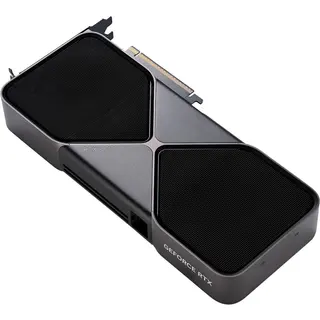
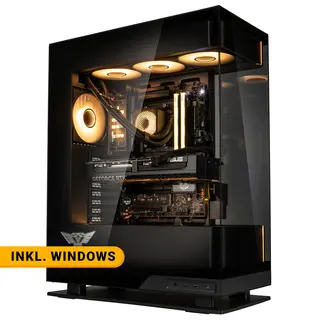
Sims reward a steady, high frame rate more than visual extras. Many racing titles lean heavily on the CPU for physics and AI cars, so a fast gaming processor, ideally one with a large cache such as AMD's X3D models, pays off, especially in big grids. GPU load depends mostly on the display setup:
| Display setup | Pixels per frame | Suggested GPU class |
|---|---|---|
| Single 27" 1440p | 3.7 million | RTX 5060 Ti / RX 9060 XT class and up |
| 34" ultrawide, 3440 × 1440 | 5.0 million | RTX 5070 / RX 9070 class and up |
| 49" super ultrawide, 5120 × 1440 | 7.4 million | RTX 5070 Ti / RX 9070 XT class and up |
| Triple 27" 1440p, 7680 × 1440 | 11.1 million | RTX 5080 class and up |
| VR headset | Depends on the headset; needs a steady 90 Hz | RTX 5070 Ti class and up |
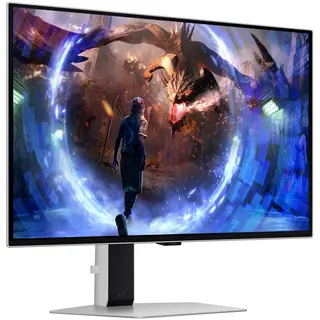
Triple 1440p screens push more pixels than a single 4K monitor (8.3 million), which is why they call for a high-end graphics card. Triples give the widest field of view and the best sense of speed in close racing, a super ultrawide is simpler to set up, and VR adds true depth perception. Whatever you choose, set the in-game field of view to match your real screen size and viewing distance: a correct FOV makes speeds and braking distances feel right. Aim for 120 Hz or more with low input lag; OLED panels add fast response and deep contrast. See gaming monitors, monitor arms and mounts, VR headsets and our gaming monitor guide. For the PC itself, the CPU and graphics card buying guides and the PC Builder help you choose.
Setup tips for your first session
- Update firmware and drivers for the wheel base, rim and pedals with the maker's software before the first drive.
- Match the steering rotation to each car: where the sim offers automatic steering lock, use it, so the virtual wheel turns exactly with yours.
- Avoid force feedback clipping: when the signal hits the base's maximum, detail is lost. Many sims show a clipping meter; lower the in-game strength until the peaks stay below the limit.
- Calibrate the pedals in the maker's software, setting the brake's maximum force to a pressure you can hold without strain.
- Connect directly: plug the base and pedals into the PC's own USB ports rather than an unpowered hub, and route cables away from moving parts and your feet.
Sim racing setups by level
| Level | Wheel base | Pedals | Mounting | Display |
|---|---|---|---|---|
| Starter | Entry direct drive, 4–8 Nm | Two or three pedals, load-cell brake if possible | Desk clamp or wheel stand | Your current monitor |
| Enthusiast | Direct drive, 9–15 Nm, with a GT or round rim | Three load-cell pedals | Aluminium profile rig or sturdy cockpit | Ultrawide or super ultrawide |
| High end | Direct drive, 16 Nm or more, several rims | Load-cell or hydraulic, fully adjustable | Aluminium profile rig with bucket seat | Triple screens or VR |
Upgrade in steps rather than all at once: most people get the biggest gain first from load-cell pedals and a rigid mounting, then from the wheel base, and last from the screens. Everything in the sim racing department ships tracked from Germany: wheels, bases and pedals with DHL and DHL Express wherever we deliver, cockpits and seats by TNT freight within Europe.
Frequently asked questions
How much torque do I need in a wheel base?
Are load-cell pedals worth it?
Can I mix wheel base, rim and pedal brands?
Do I need a cockpit for a direct drive wheel?
Still unsure? Tell us what you are building: our hardware team checks compatibility and answers by email, usually the same day.
Ask the teamWheel bases
See all- −23%
$359.99
$469.99≈ 0.004666 BTCFree EU shipping
$349.99 ≈ 0.004537 BTC
Free EU shipping
- −9%
$319.99
$349.99≈ 0.004148 BTCFree EU shipping
$359.99 ≈ 0.004666 BTC
Free EU shipping
$489.99 ≈ 0.006351 BTC
Free EU shipping
$539.99 ≈ 0.007 BTC
Free EU shipping
$479.99 ≈ 0.006222 BTC
Free EU shipping
$449.99 ≈ 0.005833 BTC
Free EU shipping
$479.99 ≈ 0.006222 BTC
Free EU shipping
- −28%
$279.99
$389.99≈ 0.003629 BTC


Pedals
See all- −31%
Asetek SimSportsIn stock
Initium Pedals
$96.99
$139.99≈ 0.001257 BTC - −25%
ConspitIn stock
CPP-Lite 2 Pedals
$439.99
$589.99≈ 0.005703 BTCFree EU shipping
FanatecIn stock
ClubSport Pedals V3
$269.99 ≈ 0.0035 BTC
HeusinkveldIn stock
Sim Pedals Sprint 3-Pedal Set Black
$549.99 ≈ 0.007129 BTC
Free EU shipping
Asetek SimSportsIn stock
Invicta Sim Racing Accelerator and Brake Pedal
$629.99 ≈ 0.008166 BTC
Free EU shipping
ConspitIn stock
CPP EVO 2 V2 Pedal Set Hydraulic Brake Cylinder Black
$629.99 ≈ 0.008166 BTC
Free EU shipping
SimagicIn stock
P500 Pedal Set 2 Pedals Load Cell Hall Angle Sensor Black
$149.99 ≈ 0.001944 BTC
ThrustmasterIn stock
Raceline Pedals III Pedal Set
$109.99 ≈ 0.001426 BTC
- −6%
HeusinkveldIn stock
Simucube ActivePedal Add-on – Accelerator and Clutch
$769.99
$819.99≈ 0.009981 BTCFree EU shipping
HeusinkveldIn stock
Sim Pedals Sprint 2-Pedal Set
$469.99 ≈ 0.006092 BTC
Free EU shipping


Keep reading
All guidesGaming monitor buying guide 2026: OLED vs IPS vs Mini-LED
The best gaming monitor is the one your graphics card can actually drive: choose the resolution and refresh rate first, then the panel type. This gui…
Updated
Graphics card buying guide 2026: RTX 50 vs RX 9000 vs Arc
For most gamers in 2026, the right graphics card is the one matched to your monitor: 1080p, 1440p or 4K decides the tier, and VRAM decides how long i…
Updated
CPU buying guide 2026: Ryzen 9000 vs Intel Core Ultra 200S
The right processor depends on what you do most: for gaming, AMD Ryzen 9000 X3D chips lead this generation, while for multi-core work both Ryzen 9000…
Updated


