
Graphics card buying guide 2026: RTX 50 vs RX 9000 vs Arc
For most gamers in 2026, the right graphics card is the one matched to your monitor: 1080p, 1440p or 4K decides the tier, and VRAM decides how long it stays comfortable. This guide compares NVIDIA RTX 50, AMD Radeon RX 9000 and Intel Arc B-series cards by resolution and budget, then covers power, connectors and case fit.


On this page8 sections
- 1Which graphics card to buy: quick picks by resolution
- 2RTX 50 vs RX 9000 vs Arc B-series: key specifications
- 3How much VRAM do you need in 2026?
- 4Power supply and connectors
- 5Will it fit? Length, thickness and airflow
- 6Platform check: PCIe, Resizable BAR and CPU balance
- 7Partner cards, cooling and noise
- 8Buying a graphics card with crypto
Choosing a graphics card in 2026 comes down to three decisions: the resolution and refresh rate you play at, how much video memory (VRAM) you need, and whether your power supply and case can take the card. All three vendors have a full current generation on sale, NVIDIA's GeForce RTX 50 series, AMD's Radeon RX 9000 series and Intel's Arc B-series, so there is a sensible option at every budget from about $220 to $2,000 at launch prices. This graphics card buying guide starts with quick picks by resolution, then explains the specifications that matter.
Which graphics card to buy: quick picks by resolution
| Your target | Cards to consider | VRAM | Notes |
|---|---|---|---|
| 1080p, high settings | RTX 5060, RX 9060 XT, Arc B580, Arc B570, RTX 5050 | 8–16 GB | Prefer 12–16 GB if you keep cards for years |
| 1440p, high refresh | RTX 5060 Ti 16 GB, RX 9060 XT 16 GB, RTX 5070, RX 9070 | 12–16 GB | The mainstream sweet spot |
| 1440p maxed out, ray tracing, entry 4K | RTX 5070 Ti, RX 9070 XT | 16 GB | 4K is comfortable with upscaling |
| 4K high refresh, path tracing | RTX 5080, RTX 5090 | 16–32 GB | The 5090's 32 GB also suits AI and 3D work |
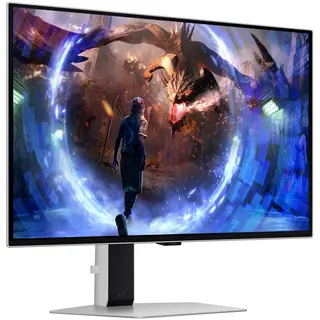
Upscaling (NVIDIA DLSS 4, AMD FSR 4, Intel XeSS 2) renders the game below your monitor's native resolution and reconstructs the image, which is why a 1440p-class card can drive a 4K screen in many games. Frame generation adds generated frames on top for smoother motion, but it does not make the game respond faster to your input, so it works best when the base frame rate is already reasonable. Still choosing a screen? Our gaming monitor guide pairs resolutions and refresh rates with these cards.
RTX 50 vs RX 9000 vs Arc B-series: key specifications
| Card | VRAM | Memory bus | Board power | Launch price |
|---|---|---|---|---|
| GeForce RTX 5090 | 32 GB GDDR7 | 512-bit | 575 W | $1,999 |
| GeForce RTX 5080 | 16 GB GDDR7 | 256-bit | 360 W | $999 |
| GeForce RTX 5070 Ti | 16 GB GDDR7 | 256-bit | 300 W | $749 |
| Radeon RX 9070 XT | 16 GB GDDR6 | 256-bit | 304 W | $599 |
| Radeon RX 9070 | 16 GB GDDR6 | 256-bit | 220 W | $549 |
| GeForce RTX 5070 | 12 GB GDDR7 | 192-bit | 250 W | $549 |
| GeForce RTX 5060 Ti | 8 or 16 GB GDDR7 | 128-bit | 180 W | $379 / $429 |
| Radeon RX 9060 XT | 8 or 16 GB GDDR6 | 128-bit | 150–160 W | $299 / $349 |
| GeForce RTX 5060 | 8 GB GDDR7 | 128-bit | 145 W | $299 |
| Intel Arc B580 | 12 GB GDDR6 | 192-bit | 190 W | $249 |
| GeForce RTX 5050 | 8 GB GDDR6 | 128-bit | 130 W | $249 |
| Intel Arc B570 | 10 GB GDDR6 | 160-bit | 150 W | $219 |
Launch prices are the manufacturers' suggested prices at release; partner cards with bigger coolers or factory overclocks cost more, and street prices move with supply. Board power is the rating for the reference specification, and overclocked partner cards can be rated higher. Current prices and stock are in our graphics card category.
NVIDIA GeForce RTX 50
NVIDIA's strengths are ray tracing and path tracing, the widest game support for its upscaler, and DLSS 4 Multi Frame Generation, exclusive to RTX 50, which can generate up to three frames for every rendered one. CUDA and the NVENC encoder make RTX cards the default for many creative and AI applications. Note that the RTX 5060 Ti, 5060 and 5050 use a PCIe 5.0 x8 link: in an older PCIe 3.0 slot they get half the bandwidth of an x16 card, which hurts most when an 8 GB card runs out of VRAM.
AMD Radeon RX 9000
RDNA 4 cards deliver strong rasterized performance for the money, and both the RX 9070 and RX 9070 XT have 16 GB. Ray tracing is much improved over earlier Radeon generations, though NVIDIA still leads in the heaviest path-traced games. FSR 4, AMD's machine-learning upscaler, is designed for RX 9000 cards and is a clear step up from earlier FSR versions. All RX 9000 cards are partner designs, and the RX 9060 XT uses a full PCIe 5.0 x16 link, which makes it a safer upgrade for older PCIe 3.0 systems.
Intel Arc B-series
The Arc B580 offers 12 GB of VRAM at a price where competitors offer 8 GB, along with XeSS 2 upscaling and frame generation and capable AV1 video encoding. Intel requires Resizable BAR for full performance, and the cards are best paired with a reasonably modern CPU. Drivers have matured considerably, but they are still the youngest of the three, so check how your main games run before buying.
How much VRAM do you need in 2026?
VRAM holds textures, geometry and the frame buffers the GPU works on. When a game needs more than the card has, data spills over the PCIe bus into system memory, and the result is stutter and blurry textures rather than a gradual slowdown. Higher resolutions, ray tracing and frame generation all increase VRAM use.
| VRAM | Good for | Watch out for |
|---|---|---|
| 8 GB | 1080p with high (not maximum) textures, esports titles | Already tight in some new releases; avoid for 1440p |
| 10–12 GB | 1080p at max settings, 1440p at high settings | Ray tracing plus frame generation can fill 12 GB at 1440p |
| 16 GB | 1440p max settings, 4K with upscaling, light AI and creative work | The safe choice for a card you plan to keep four years or more |
| 32 GB | 4K path tracing, large local AI models, 3D rendering | Only the RTX 5090 among current gaming cards |
If you run local AI models, VRAM decides which models fit, so it matters more than raw speed; see our local AI PC guide. For more than 32 GB on one card, look at workstation GPUs such as the RTX PRO Blackwell family, with up to 96 GB.
Power supply and connectors
Check total wattage and the power connector before you buy. NVIDIA recommends 1000 W of system power for the RTX 5090, 850 W for the RTX 5080, 750 W for the RTX 5070 Ti and 650 W for the RTX 5070. As a rule of thumb, a quality 750 W unit suits an RX 9070 XT build, and 550–650 W covers RX 9060 XT, RTX 5060-class and Arc B-series systems. Our PSU sizing guide shows the math for your exact parts.
Every RTX 5090 and RTX 5080, and most RTX 5070 Ti and RTX 5070 models, use the 16-pin 12V-2x6 connector, which carries up to 600 W through one cable. Mid-range and entry cards mostly use one or two 8-pin PCIe plugs, and Radeon partner cards generally use 8-pin plugs, with a few premium models on 12V-2x6. An ATX 3.1 power supply with a native 12V-2x6 cable is the cleanest setup; otherwise use the adapter supplied with the card, with each 8-pin input on its own cable from the PSU.
Will it fit? Length, thickness and airflow
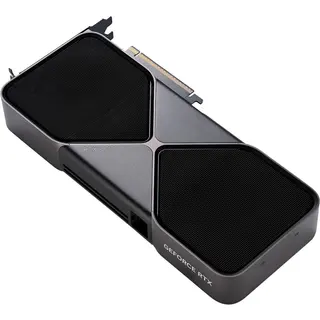
Current cards are big. High-end partner RTX 5080 and RTX 5090 models are often 330–360 mm long and three to four slots thick, while the RTX 5090 and RTX 5080 Founders Edition cards are two-slot designs 304 mm long. Before ordering, check:
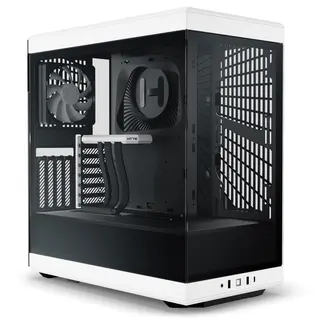
- Length: your case's maximum GPU length, minus any radiator and fans mounted at the front.
- Thickness: how many expansion slots the card occupies, which decides what still fits in the PCIe slots below it.
- Cable room: space between the card and the side panel so the power cable can leave the plug without a sharp bend.
- Weight: fit the support bracket supplied with heavy triple-fan cards to prevent sag.
- Small cases: filter our graphics cards by SFF-ready and compare the card with your case's limits; dual-fan RTX 5060 Ti, RTX 5070 and RX 9060 XT models are common choices for mini-ITX builds.
- Airflow: a 300 W card needs intake fans feeding it cool air; see PC cases and case fans.
The PC Builder checks card length against your case and the recommended PSU wattage for you.
Platform check: PCIe, Resizable BAR and CPU balance
- PCIe: every current card works in any PCIe x16 slot, from PCIe 3.0 to 5.0. On PCIe 4.0 and 5.0 boards the link is rarely a bottleneck; on PCIe 3.0 boards, prefer x16 cards (RX 9060 XT, RX 9070 series, RTX 5070 and above).
- Resizable BAR: enable it in the BIOS (often listed as Re-Size BAR Support, alongside Above 4G Decoding). It is required for Arc cards and recommended for Radeon, where AMD calls it Smart Access Memory.
- CPU balance: at 4K the graphics card sets the frame rate, but at 1080p and 1440p with high refresh rates a slow CPU can hold a fast card back. Our CPU buying guide covers sensible pairings.
Partner cards, cooling and noise
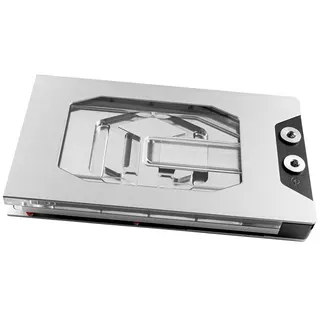
Partner cards built on the same GPU differ mainly in cooler size, noise, factory clocks and price. A larger triple-fan cooler usually runs quieter at the same power, while factory overclocks typically add a few percent at most. Blower and liquid-cooled models suit special cases such as multi-GPU workstations or custom loops; for the latter, see our custom water cooling guide. Compare length and slot width first, then pick the quietest cooler that fits your case and budget.
Buying a graphics card with crypto
A graphics card is usually the most expensive part of a build, and paying with Bitcoin, ETH or USDT at HodlChip works the same for a $250 card as for a $2,000 one: one on-chain payment of the quoted amount, and standard shipping is free within the EU on orders of $300 or more. Cards ship in discreet, unbranded packaging with the full manufacturer warranty, and for the first 12 months we handle any warranty claim with the manufacturer for you. New to paying with crypto? Read how to buy PC hardware with Bitcoin first.
Frequently asked questions
Is 8 GB of VRAM enough in 2026?
RTX 5070 Ti or RX 9070 XT: which should I buy?
What power supply do I need for an RTX 5090?
Does a PCIe 5.0 graphics card work in a PCIe 4.0 or 3.0 slot?
Still unsure? Tell us what you are building: our hardware team checks compatibility and answers by email, usually the same day.
Ask the teamGraphics cards
See allNVIDIAIn stock · 1 per order
GeForce RTX 5090 Founders Edition 32GB GDDR7
- 32 GB GDDR7
- 304 mm
- 2 slots
$3,999.99 ≈ 0.05185 BTC
Free EU shipping
NVIDIAIn stock · 1 per order
GeForce RTX 4090 Founders Edition 24GB GDDR6X
- 24 GB GDDR6X
- 304 mm
- 3 slots
$2,899.99 ≈ 0.03759 BTC
Free EU shipping
NVIDIAIn stock · 1 per order
GeForce RTX 3090 Ti Founders Edition 24GB GDDR6X
- 24 GB GDDR6X
- 313 mm
- 3 slots
$1,799.99 ≈ 0.02333 BTC
Free EU shipping
$759.99 ≈ 0.009851 BTC
Free EU shipping
$1,199.99 ≈ 0.01555 BTC
Free EU shipping
$1,739.99 ≈ 0.02255 BTC
Free EU shipping
$809.99 ≈ 0.0105 BTC
Free EU shipping
$1,229.99 ≈ 0.01594 BTC
Free EU shipping
$899.99 ≈ 0.01167 BTC
Free EU shipping
$1,669.99 ≈ 0.02165 BTC
Free EU shipping


Power supplies
See all- −24%
be quiet!In stock
Pure Power 13M 80 PLUS Gold Power Supply ATX 3.1 PCIe 5.1 1000W Black
- 1000 W
- 80 Plus Gold
- ATX
$129.99
$169.99≈ 0.001685 BTC be quiet!In stock
Dark Power 14 80 PLUS Titanium Power Supply ATX 3.1 PCIe 5.1 1000 Watts
- 1000 W
- 80 Plus Titanium
- ATX
$199.99 ≈ 0.002592 BTC
- −25%
$82.99
$109.99≈ 0.001076 BTC - −23%
$92.99
$119.99≈ 0.001205 BTC - −34%
$92.99
$139.99≈ 0.001205 BTC $129.99 ≈ 0.001685 BTC
ADATAIn stock
XPG CORE REACTOR II VE 80 PLUS Gold Power Supply ATX 3.1 850W Black
- 850 W
- 80 Plus Gold
- ATX
$75.99 ≈ 0.000985 BTC
- −35%
$97.99
$149.99≈ 0.00127 BTC ASUSIn stock
ROG Strix 850 Platinum Power Supply 80 PLUS Platinum Modular PCIe 5.1 850W
- 850 W
- 80 Plus Platinum
- ATX
$159.99 ≈ 0.002074 BTC
CorsairIn stock
RMe Series RM850e (3rd Gen) 850W ATX 3.1 PCIe 5.1 80 PLUS Gold White
- 850 W
- 80 Plus Gold
- ATX
$119.99 ≈ 0.001555 BTC


Keep reading
All guidesPSU sizing guide 2026: how many watts does your PC need?
To size a power supply, add your CPU and graphics card power ratings plus about 75 W for everything else, then choose a quality unit rated 20 to 40% …
Updated
Gaming monitor buying guide 2026: OLED vs IPS vs Mini-LED
The best gaming monitor is the one your graphics card can actually drive: choose the resolution and refresh rate first, then the panel type. This gui…
Updated
CPU buying guide 2026: Ryzen 9000 vs Intel Core Ultra 200S
The right processor depends on what you do most: for gaming, AMD Ryzen 9000 X3D chips lead this generation, while for multi-core work both Ryzen 9000…
Updated


