
Local AI PC guide (2026): VRAM and GPUs for running LLMs
The spec that matters most in a local AI PC is GPU memory: it decides which language models you can run, and memory bandwidth decides how fast. This guide shows how much VRAM each model size needs at each quantization level, compares consumer and RTX PRO GPUs, and covers RAM, storage, power and cooling for a 2026 build.


On this page7 sections
For a local AI PC that runs large language models (LLMs) well, buy the GPU with the most VRAM you can afford, then build a balanced system around it. As a rule of thumb, a model quantized to 4 bits needs roughly 0.6 GB of VRAM per billion parameters, plus room for context. That means 16 GB comfortably runs models up to about 14 billion parameters, 32 GB reaches the 30-billion class, and 70-billion-parameter models need 48 GB or more, unless you accept much slower offloading to system RAM.
How much VRAM do you need for local LLMs?
Model weights take parameters × bits per weight ÷ 8 bytes. On top come the KV cache, which grows with context length and the number of simultaneous requests, and one to two gigabytes of runtime overhead. The table shows the weights alone, rounded, then a practical VRAM target for 4-bit use with a useful context window.
| Model size | 16-bit (FP16/BF16) | 8-bit | 4-bit | Practical VRAM at 4-bit |
|---|---|---|---|---|
| 7–8B | 14–16 GB | 7–8 GB | About 4 GB | 8 GB or more |
| 12–14B | 24–28 GB | 12–14 GB | 6–7 GB | 12–16 GB |
| 24–32B | 48–64 GB | 24–32 GB | 12–16 GB | 24–32 GB |
| 70B | 140 GB | 70 GB | 35 GB | 48 GB or more |
| 100–120B mixture of experts | 200–240 GB | 100–120 GB | 50–60 GB | 64–96 GB, or GPU plus system RAM |
Quantization stores weights with fewer bits. 8-bit is close to the original quality; well-made 4-bit quantizations are the usual sweet spot for local use; below 4 bits quality falls faster, especially on smaller models. Popular 4-bit formats such as GGUF Q4_K_M average slightly more than 4 bits per weight, which is why the practical column adds headroom. You will meet GGUF in llama.cpp, Ollama and LM Studio, and GPTQ, AWQ, FP8 or FP4 variants in GPU-focused engines such as vLLM.
Mixture-of-experts (MoE) models activate only part of their parameters for each token, so they run faster than dense models of the same total size, but every expert still has to sit in memory. Engines such as llama.cpp can keep experts in system RAM and the rest on the GPU, which makes large MoE models usable on one consumer card with plenty of DDR5, at reduced speed. OpenAI's gpt-oss-120b, for example, was designed to fit on a single 80 GB GPU.
Memory bandwidth decides generation speed
When a dense model generates text, each new token reads all of the weights from memory. Generation speed therefore has a hard ceiling of roughly memory bandwidth ÷ model size in bytes: a card with 1,792 GB/s, the RTX 5090's specification, reading a 20 GB model cannot exceed about 90 tokens per second, before any other overhead. Processing a long prompt, by contrast, is limited by compute and favours GPUs with more tensor throughput. This is why a GPU with fast GDDR7 generates text far faster than a system with more, but slower, memory, as long as the model fits in VRAM.
GPU choices: consumer GeForce vs RTX PRO
| GPU | Memory | Board power | Comfortable at 4-bit |
|---|---|---|---|
| GeForce RTX 5060 Ti 16 GB | 16 GB GDDR7 | 180 W | Up to about 14B dense, 20B-class MoE |
| GeForce RTX 5070 Ti / RTX 5080 | 16 GB GDDR7 | 300 W / 360 W | Same capacity, roughly double the bandwidth of the 5060 Ti |
| Radeon RX 9070 XT | 16 GB GDDR6 | 304 W | Up to about 14B, with ROCm or Vulkan |
| GeForce RTX 5090 | 32 GB GDDR7 | 575 W | Up to about 32B with long context |
| Radeon AI PRO R9700 | 32 GB GDDR6 | 300 W | Up to about 32B |
| RTX PRO 4000 Blackwell | 24 GB GDDR7 ECC | 140 W, single slot | Up to about 24B; dense multi-GPU builds |
| RTX PRO 4500 Blackwell | 32 GB GDDR7 ECC | 200 W | Up to about 32B |
| RTX PRO 5000 Blackwell | 48 GB GDDR7 ECC | 300 W | 70B at 4-bit |
| RTX PRO 6000 Blackwell | 96 GB GDDR7 ECC | 600 W, or 300 W Max-Q | 70B at 8-bit, 100B-class MoE at 4-bit |
Consumer GeForce cards give the most performance per dollar, and the RTX 5090's 32 GB is the most memory on a consumer card. RTX PRO cards add capacity (up to 96 GB on one card), ECC memory, certified drivers and coolers designed for multi-GPU workstations: the RTX PRO 6000 Blackwell comes as a 600 W Workstation Edition and a 300 W Max-Q version with a blower-style cooler that exhausts heat out of the case, which suits stacking several cards. NVIDIA's CUDA remains the best-supported platform for AI software; AMD and Intel cards work well with llama.cpp-based tools through Vulkan, ROCm or SYCL, but check support in the exact software you plan to use. Shop graphics cards, and see our graphics card buying guide for gaming considerations.
One GPU or two? Inference engines can split a model across GPUs, so two 32 GB cards give 64 GB of combined VRAM. Current GeForce and RTX PRO Blackwell cards have no NVLink and talk over PCIe: splitting by layers works well for single-user chat, while tensor parallelism benefits from PCIe 5.0 with eight or sixteen lanes per card. Mainstream AM5 and LGA1851 boards split their lanes to x8/x8 at best, while Threadripper and Xeon W platforms have enough lanes for three or four cards at full width; complete AI workstations are built around them.
Unified memory alternatives
Systems with large unified memory trade bandwidth for capacity. Mini PCs with AMD's Ryzen AI Max+ offer up to 128 GB of LPDDR5X at 256 GB/s, NVIDIA's DGX Spark pairs 128 GB with 273 GB/s, and a Mac Studio with M3 Ultra reaches 819 GB/s with up to 512 GB. They load models that would otherwise need several GPUs, but generate tokens more slowly than a high-end GPU on any model that fits in its VRAM. They suit large MoE models at modest speed, quiet desks and low power; a GPU workstation suits speed, fine-tuning and image or video generation.
System RAM and storage for AI
System RAM: fit at least as much as your total VRAM, ideally twice as much, so models load smoothly and the operating system and tools have room. For MoE offloading, 128 GB of DDR5 or more makes a real difference. On AM5 and LGA1851, four modules usually run at lower speeds than two, so prefer two large modules, such as 2 × 48 GB or 2 × 64 GB. Threadripper and Xeon W platforms add memory channels, which also speeds up CPU offloading. Our how much RAM guide explains capacities; shop memory.
Storage: model files are large (a 70B model at 4-bit is around 40 GB) and collections grow quickly, so plan for 2–4 TB of NVMe storage. A PCIe 4.0 or 5.0 drive loads models quickly; once a model sits in VRAM, drive speed no longer matters. See NVMe SSDs and our NVMe SSD guide.
Power and cooling for AI workloads
AI workloads hold GPUs at high load for long stretches, so size the power supply for sustained draw, not short gaming peaks:
- The RTX 5090 is rated at 575 W, and NVIDIA recommends a 1,000 W power supply. Choose a quality ATX 3.1 unit with a native 12V-2x6 cable and seat the connector fully.
- Two high-end GPUs plus a desktop CPU can exceed 1,400 W. In North America, a standard 15 A, 120 V circuit supports about 1,440 W of continuous load, so very large builds may need a 20 A or 240 V circuit.
- Power-limiting the GPU, for example to 70–80% of its rated power, is common for inference: memory-bound text generation loses little speed while heat and noise drop.
For cooling, open-air cards in multi-GPU builds need space between them and strong front-to-back airflow, while blower-style workstation cards push heat straight out of the case. Check card length and slot width against your case, and consider an AIO cooler or custom water cooling for dense, quiet builds. Our PSU sizing guide walks through the maths; browse power supplies.
Three balanced local AI builds
| Goal | GPU | System RAM | Storage | Power supply |
|---|---|---|---|---|
| Chat and coding with 7–14B models | One 16 GB card | 32–64 GB DDR5 | 2 TB NVMe | 650–850 W, per the GPU maker |
| Up to 32B models, image generation | RTX 5090 or another 32 GB card | 64–128 GB DDR5 | 2–4 TB NVMe | 1,000–1,200 W |
| 70B models and large MoE | RTX PRO 6000 Blackwell, or two 32–48 GB cards | 128–256 GB | 4 TB NVMe or more | 1,200–1,600 W |
Check compatibility as you go with the PC Builder.
Frequently asked questions
How much VRAM do I need to run a 70B model locally?
Is an RTX 5090 or an RTX PRO card better for local AI?
Can I run LLMs on an AMD or Intel GPU?
Can I get a quote for an AI workstation?
Still unsure? Tell us what you are building: our hardware team checks compatibility and answers by email, usually the same day.
Ask the teamGraphics cards
See allNVIDIAIn stock · 1 per order
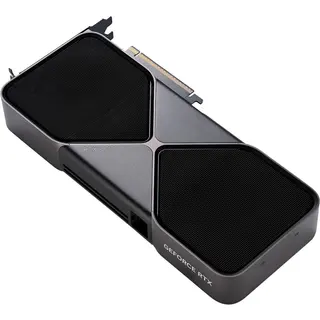
GeForce RTX 5090 Founders Edition 32GB GDDR7
- 32 GB GDDR7
- 304 mm
- 2 slots
$3,999.99 ≈ 0.05238 BTC
Free EU shipping
NVIDIAIn stock · 1 per order
GeForce RTX 4090 Founders Edition 24GB GDDR6X
- 24 GB GDDR6X
- 304 mm
- 3 slots
$2,899.99 ≈ 0.03797 BTC
Free EU shipping
NVIDIAIn stock · 1 per order
GeForce RTX 3090 Ti Founders Edition 24GB GDDR6X
- 24 GB GDDR6X
- 313 mm
- 3 slots
$1,799.99 ≈ 0.02357 BTC
Free EU shipping
$759.99 ≈ 0.009952 BTC
Free EU shipping
$1,199.99 ≈ 0.01571 BTC
Free EU shipping
$1,739.99 ≈ 0.02278 BTC
Free EU shipping
$809.99 ≈ 0.01061 BTC
Free EU shipping
$1,229.99 ≈ 0.01611 BTC
Free EU shipping
$899.99 ≈ 0.01179 BTC
Free EU shipping
$1,669.99 ≈ 0.02187 BTC
Free EU shipping


Workstation PCs
See allHodlChipIn stock
Vektor Local Dev S AMD Ryzen 7 9700X NVIDIA RTX 5080
$4,659.99 ≈ 0.06102 BTC
Free EU shipping
$4,299.99 ≈ 0.05631 BTC
Free EU shipping
$2,409.99 ≈ 0.03156 BTC
Free EU shipping
HodlChipIn stock
Vektor Local Dev M AMD Ryzen 7 9700X NVIDIA RTX 5090
$8,049.99 ≈ 0.1054 BTC
Free EU shipping
HodlChipIn stock
Vektor Creator M Intel Core Ultra 7 270K Plus GeForce RTX 5090
$9,659.99 ≈ 0.1265 BTC
Free EU shipping
$16,179.99 ≈ 0.2119 BTC
Free EU shipping
NVIDIABackorder
DGX Spark Founders Edition GB10 128GB 4TB
- GB10 Superchip
- 128 GB unified memory
- 4 TB SSD
$4,229.99 ≈ 0.05539 BTC
Free EU shipping


Keep reading
All guidesGraphics card buying guide 2026: RTX 50 vs RX 9000 vs Arc
For most gamers in 2026, the right graphics card is the one matched to your monitor: 1080p, 1440p or 4K decides the tier, and VRAM decides how long i…
Updated
PSU sizing guide 2026: how many watts does your PC need?
To size a power supply, add your CPU and graphics card power ratings plus about 75 W for everything else, then choose a quality unit rated 20 to 40% …
Updated
How much RAM do you need in 2026? DDR5 buying guide
For most gaming and everyday PCs in 2026, 32 GB of DDR5 in two matched modules is the right amount: 16 GB is now the minimum, and 64 GB or more pays …
Updated


