
PSU sizing guide 2026: how many watts does your PC need?
To size a power supply, add your CPU and graphics card power ratings plus about 75 W for everything else, then choose a quality unit rated 20 to 40% above that total. This guide shows the math with real 2026 parts and explains ATX 3.1, the 12V-2x6 connector, efficiency ratings, SFX sizes and why transient spikes matter.


On this page7 sections
The quickest way to size a PSU: add the processor's maximum package power and the graphics card's rated board power, add about 75 W for the rest of the system, then multiply by 1.2 for a minimum and by 1.4 for comfortable headroom, rounding up to a standard size. A quality ATX 3.1 unit sized this way rides through transient spikes, runs in its efficient middle range and leaves room for an upgrade. The sections below show the math for real 2026 builds and what to look for beyond the wattage number.
PSU wattage math, step by step
- Processor: use the maximum package power, not the headline TDP. For AMD Ryzen, the package power limit is 1.35 times the TDP: 88 W for 65 W chips, 162 W for 120 W chips and 230 W for 170 W chips. Intel's Core Ultra 7 and 9 K-series chips have a 250 W maximum turbo power, and the Core Ultra 5 245K 159 W.
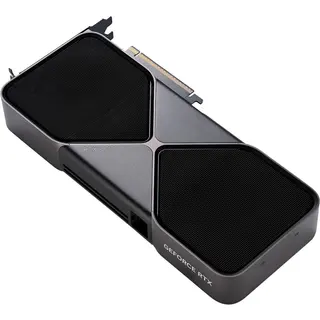
- Graphics card: use the board power from the spec sheet: RTX 5090 575 W, RTX 5080 360 W, RTX 5070 Ti 300 W, RTX 5070 250 W, RX 9070 XT 304 W, RX 9070 220 W, RX 9060 XT 16 GB about 160 W. Factory-overclocked partner cards can be rated higher, so check the product page.
- Everything else: about 75 W covers the motherboard, memory, a couple of SSDs and fans in a typical build. Add more for many fans, lighting, a custom loop pump or power-hungry USB devices.
- Headroom: multiply the total by 1.2 for a minimum and by 1.4 for comfortable headroom, round each up to a standard size (450, 550, 650, 750, 850, 1000 or 1200 W), and never go below the graphics card maker's recommendation.
| Example build | CPU max | GPU board power | Total with 75 W rest | Suggested PSU |
|---|---|---|---|---|
| Ryzen 5 9600X + RX 9060 XT 16 GB | 88 W | 160 W | 323 W | 450–550 W |
| Ryzen 7 9800X3D + RTX 5070 | 162 W | 250 W | 487 W | 650–750 W |
| Ryzen 7 9800X3D + RTX 5070 Ti | 162 W | 300 W | 537 W | 750–850 W (NVIDIA minimum 750 W) |
| Core Ultra 7 265K + RX 9070 XT | 250 W | 304 W | 629 W | 850–1000 W |
| Ryzen 9 9950X3D + RTX 5080 | 230 W | 360 W | 665 W | 850–1000 W |
| Ryzen 7 9800X3D + RTX 5090 | 162 W | 575 W | 812 W | 1000–1200 W |
These totals are worst cases. In games, the processor rarely runs at its full package power while the graphics card is maxed out, so real draw is usually lower. The margin covers rendering on CPU and GPU at once, transient spikes and future upgrades, and lets the PSU fan stay slow. For reference, NVIDIA recommends 1000 W for RTX 5090 systems, 850 W for the RTX 5080, 750 W for the RTX 5070 Ti and 650 W for the RTX 5070; with a 250 W processor such as the Core Ultra 9 285K next to an RTX 5090, go to 1200 W.
ATX 3.1 and the 12V-2x6 connector
ATX 3.0 and its 2023 update, ATX 3.1, are Intel's current power supply design guides. Two changes matter to buyers.
- Transient handling: the specification requires power supplies to ride through very short power excursions of up to twice their rated power without shutting down. Graphics cards draw brief spikes well above their rated board power, and older units with tight over-current protection could switch off under them.
- Native 16-pin GPU power: ATX 3.1 units provide the 12V-2x6 connector, a revision of the earlier 12VHPWR design with longer power contacts and shorter sense pins, so a plug that is not fully seated is less likely to deliver full power. One cable carries up to 600 W.
An ATX 3.x unit is not strictly required: a good older power supply with enough wattage works with the adapter supplied with the card, as long as each 8-pin input gets its own cable from the PSU. Each 8-pin PCIe connector is rated for 150 W, and the graphics card slot supplies up to 75 W. For a new build in 2026, though, an ATX 3.1 unit with a native cable is the cleanest choice. Push the 16-pin plug in until it latches with no visible gap, and avoid sharp bends right at the connector.
Transient spikes: why some PCs shut down under load
If a PC switches off abruptly when a game starts or a heavy scene loads, with no blue screen and no error, the power supply's protection circuits are a prime suspect. Modern graphics cards change their power draw within microseconds, and the resulting spikes can trip the over-current or over-power protection of a small or aging unit even when the average draw looks fine.
Start with the wattage math above, give each GPU power input its own cable, and reseat the connectors at both ends. If the unit predates ATX 3.0 or runs close to its limit, replacing it with a correctly sized ATX 3.1 model is the reliable fix, and it will usually be quieter too.
80 PLUS and Cybenetics efficiency ratings
| 80 PLUS level (115 V) | 20% load | 50% load | 100% load |
|---|---|---|---|
| Bronze | 82% | 85% | 82% |
| Gold | 87% | 90% | 87% |
| Platinum | 90% | 92% | 89% |
| Titanium | 92% | 94% | 90% |
Efficiency decides how much power turns into heat inside the unit, not the quality of the power it delivers. At a 400 W load, a 90% efficient unit draws about 444 W from the wall and a 92% efficient one about 435 W, a difference of under 10 W. Platinum and Titanium units pay off mainly in PCs that run under load for many hours a day, such as workstations, AI rigs and home servers, and in small cases where less heat helps. Titanium also requires 90% efficiency at 10% load, and 80 PLUS sets higher thresholds for 230 V mains, where every unit runs slightly more efficiently.
Many recent units also carry Cybenetics ratings from an independent lab that measures efficiency across the whole load range (ETA levels) and fan noise (LAMBDA levels). An efficiency badge says nothing about component quality or protections, so also look at the warranty: premium units often come with 10 years or more.
ATX vs SFX and SFX-L: sizes and fit
| Form factor | Size (W × H × D) | Common wattages | Use |
|---|---|---|---|
| ATX | 150 × 86 × 140 mm, often deeper | 450–1600 W | Mid and full towers |
| SFX | 125 × 63.5 × 100 mm | Up to about 1000 W | Mini-ITX and other small cases |
| SFX-L | 125 × 63.5 × 130 mm | Up to about 1000 W | Small cases with a little more depth; room for a larger, quieter fan |
High-wattage ATX units are often 160–200 mm deep, so check your case's PSU length limit and leave room for modular cable plugs and any bottom fans. An SFX unit fits ATX cases with an adapter bracket, which many SFX models include. The PC Builder checks the PSU form factor against your case, and our power supply category filters by wattage, efficiency, cabling, ATX version and form factor.
Power supply buying checklist
- Wattage: from the math above, never below the graphics card maker's recommendation.
- Standard: ATX 3.1 with a native 12V-2x6 cable for any card that uses the 16-pin connector.
- Efficiency: 80 PLUS Gold is the sensible default; Platinum or Titanium for long daily loads or small cases.
- Cabling: fully modular for tidy and small builds; semi-modular is fine on a budget.
- Noise: a zero-RPM fan mode keeps the fan off at light loads, where a well-sized unit spends most of its time.
- Protection: pair the PC with a UPS with pure sine wave output, the safe match for modern active-PFC power supplies.
- Cables: replacement and custom cables must be made for your exact PSU series; see cables and adapters and sleeved cables.
Buying a power supply with crypto
A new graphics card is often the reason to replace a power supply, and ordering both together at HodlChip means one payment in Bitcoin, ETH or USDT and free shipping within the EU at $300 or more. Every unit is new and sealed with the full manufacturer warranty, and for the first 12 months we handle any warranty claim with the manufacturer for you. See how to buy PC hardware with Bitcoin for the checkout steps, and the graphics card buying guide for each card's power needs.
Frequently asked questions
Is a 750 W PSU enough for an RTX 5070 Ti?
Do I need an ATX 3.1 power supply for an RTX 50 graphics card?
Is 80 PLUS Gold good enough?
Can I use an SFX power supply in an ATX case?
Why does my PC shut down when gaming?
Still unsure? Tell us what you are building: our hardware team checks compatibility and answers by email, usually the same day.
Ask the teamPower supplies
See all- −24%
be quiet!In stock
Pure Power 13M 80 PLUS Gold Power Supply ATX 3.1 PCIe 5.1 1000W Black
- 1000 W
- 80 Plus Gold
- ATX
$129.99
$169.99≈ 0.001702 BTC be quiet!In stock
Dark Power 14 80 PLUS Titanium Power Supply ATX 3.1 PCIe 5.1 1000 Watts
- 1000 W
- 80 Plus Titanium
- ATX
$199.99 ≈ 0.002619 BTC
- −25%
$82.99
$109.99≈ 0.001087 BTC - −23%
$92.99
$119.99≈ 0.001218 BTC - −34%
$92.99
$139.99≈ 0.001218 BTC $129.99 ≈ 0.001702 BTC
ADATAIn stock
XPG CORE REACTOR II VE 80 PLUS Gold Power Supply ATX 3.1 850W Black
- 850 W
- 80 Plus Gold
- ATX
$75.99 ≈ 0.0009951 BTC
- −35%
$97.99
$149.99≈ 0.001283 BTC ASUSIn stock
ROG Strix 850 Platinum Power Supply 80 PLUS Platinum Modular PCIe 5.1 850W
- 850 W
- 80 Plus Platinum
- ATX
$159.99 ≈ 0.002095 BTC
CorsairIn stock
RMe Series RM850e (3rd Gen) 850W ATX 3.1 PCIe 5.1 80 PLUS Gold White
- 850 W
- 80 Plus Gold
- ATX
$119.99 ≈ 0.001571 BTC


Cables & adapters
See all- −38%
WatercoolIn stock
MAIN Extension Cable for MO-RA IV 1.5m
$7.99
$12.99≈ 0.0001046 BTC - −14%
GloriousIn stock
Coiled Cable Nebula USB-C to USB-A 1.37m Purple
$11.99
$13.99≈ 0.000157 BTC - −15%
GloriousIn stock
Coiled Cable Prism Pink USB-C to USB-A 1.37m
$10.99
$12.99≈ 0.0001439 BTC - −82%
PhanteksIn stock
8-Pin EPS12V Extension 50cm Sleeved Red
$1.99
$10.99≈ 0.00002606 BTC - −75%
KolinkIn stock
SATA Data and Power Cable Internal Blue
$0.99
$3.99≈ 0.00001296 BTC - −33%
WatercoolIn stock
MAIN Cable Coupler 4-Pin Molex
$3.99
$5.99≈ 0.00005225 BTC - −60%
SingularityIn stock
PowerBoard Connection Cable 6-Pin PCIe
$1.99
$4.99≈ 0.00002606 BTC - −50%
PhanteksIn stock
Extension Cable Set 500mm Black
$9.99
$19.99≈ 0.0001308 BTC - −50%
Lian LiIn stock
PW-U2TPAW USB 2.0 Hub 1 to 3 Splitter White
$9.99
$19.99≈ 0.0001308 BTC - −40%
BitFenixIn stock
Alchemy 6-Pin PCIe Extension Cable 45 cm Sleeved White
$2.99
$4.99≈ 0.00003915 BTC


Keep reading
All guidesGraphics card buying guide 2026: RTX 50 vs RX 9000 vs Arc
For most gamers in 2026, the right graphics card is the one matched to your monitor: 1080p, 1440p or 4K decides the tier, and VRAM decides how long i…
Updated
CPU buying guide 2026: Ryzen 9000 vs Intel Core Ultra 200S
The right processor depends on what you do most: for gaming, AMD Ryzen 9000 X3D chips lead this generation, while for multi-core work both Ryzen 9000…
Updated
Custom water cooling guide for beginners (2026)
A custom water cooling loop carries CPU and GPU heat to radiators you choose, for lower noise and temperatures under sustained load than air or an AI…
Updated


