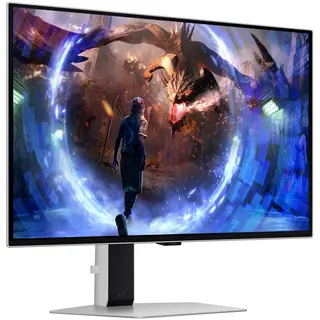
OLED, IPS, VA and Mini-LED gaming monitors from 1080p to 4K and ultrawide, at 144 Hz and well beyond. Filter by size, resolution, refresh rate, panel and curve, and pay in BTC, ETH or USDT.
Ships in 1–2 business daysFrom our warehouse in Germany
New and sealedFull manufacturer warranty
30-day returnsSimple, tracked and refunded in crypto
Buying gaming monitors at HodlChip
Match the monitor to your graphics card and games:
1440p at 240 Hz or more: the popular choice for competitive and mixed gaming on an RTX 5070-class or Radeon RX 9070-class card.
4K at 144 to 240 Hz: for RTX 5080 and RTX 5090 owners who want sharp detail in single-player games.
Ultrawide (3440 × 1440): a wider field of view for racing, flight and strategy games; check that your games support 21:9.
1080p at very high refresh rates: for esports players who put frame rate ahead of detail.
Panel:OLED (QD-OLED or WOLED) offers near-instant response and true blacks, well suited to dark rooms and HDR; high-refresh IPS is brighter for daytime use and has no burn-in concern; VA gives deep contrast at lower prices.
Connection: to reach the top refresh rate at 4K, use the port the monitor specifies for it (DisplayPort 1.4 with DSC, DisplayPort 2.1 or HDMI 2.1) and check that your GPU supports that mode. Adaptive sync (G-SYNC Compatible or FreeSync) prevents tearing. Our gaming monitor guide goes deeper, and display cables cover the connection.
144 Hz is a clear step up from 60 Hz, and 240 Hz and above benefits competitive games when your GPU can reach those frame rates. Pick a refresh rate your graphics card can drive at your resolution.
Should I choose OLED or IPS for gaming?
OLED offers near-instant response, true blacks and strong HDR, which suits dark rooms and mixed gaming. IPS is brighter in sunny rooms, often costs less at high resolutions and has no burn-in concern. Both are good choices with different strengths.
Do I need G-SYNC or FreeSync?
Adaptive sync matches the refresh rate to your frame rate to prevent tearing. Most current gaming monitors support FreeSync and are G-SYNC Compatible, so they work with both GeForce and Radeon cards over DisplayPort, and over HDMI 2.1 with recent graphics cards.