
USDT TRC20 vs ERC20: fees, speed and which network to use
USDT exists on several blockchains, and the two HodlChip accepts are TRON (TRC20) and Ethereum (ERC20). This guide compares their fees, speed and address formats, shows how exchanges label them, and explains how to avoid the most expensive mistake: sending on the wrong network.


On this page8 sections
USDT on TRC20 vs ERC20 comes down to this: both are the same dollar-pegged stablecoin issued by Tether, but they live on different blockchains. TRC20 runs on TRON, where transfers usually confirm in about a minute and the fee is paid in TRX. ERC20 runs on Ethereum, where the fee is paid in ETH and varies with network demand, and payments typically confirm in 1–5 minutes. Use the network your USDT already sits on, keep a little TRX or ETH for the fee, and select exactly the same network at checkout and in the wallet or exchange you send from. Tokens sent on the wrong network may be lost for good.
What TRC20 and ERC20 mean
ERC20 is the token standard on Ethereum; TRC20 is TRON's equivalent. Tether issues USDT natively on both, as well as on other blockchains. A USDT balance on TRON and a USDT balance on Ethereum are each worth one dollar per token, but they are separate tokens on separate ledgers: you cannot send one onto the other's network directly. Moving between them means going through an exchange or a bridge, which costs fees and adds risk.
USDT TRC20 vs ERC20 at a glance
| USDT on TRON (TRC20) | USDT on Ethereum (ERC20) | |
|---|---|---|
| Network fee paid in | TRX, or energy from staked or rented TRX | ETH (gas) |
| Fee level | Usually low and fairly predictable | Varies with demand on Ethereum |
| Block time | About 3 seconds | About 12 seconds |
| Typical confirmation at HodlChip | About 1 minute | 1–5 minutes |
| Address format | Starts with T, 34 characters | Starts with 0x, 42 characters |
| Exchange labels | TRON, TRX or TRC20 | Ethereum, ETH or ERC20 |
| Wallet support | Many multi-coin hardware and software wallets | Nearly all multi-coin hardware and software wallets |
| Look-alike risk | Low: the format is unique to TRON | High: BNB Chain, Polygon, Arbitrum, Base and others use the same 0x format |
USDT fees on TRON and Ethereum
Ethereum (ERC20). Every transaction pays for gas: fee = gas used × (base fee + priority fee), paid in ETH. A USDT transfer uses a fairly constant amount of gas, but the base fee moves with demand, so the fee in dollars changes from hour to hour. Your wallet shows an estimate before you sign. The sending address must hold some ETH, because USDT cannot pay for its own gas.
TRON (TRC20). TRON charges in resources rather than gas: a USDT transfer consumes bandwidth and energy. If your account has energy, from staking TRX or renting it from a provider, the transfer uses that; otherwise the network burns TRX from your balance to cover it. Sending USDT to an address that has never held USDT, such as the fresh deposit address you get for each HodlChip order, uses roughly twice the energy of a transfer to an existing holder, so keep a few extra TRX available. If there is not enough TRX or energy, the transfer can fail, and the resources already consumed are not refunded.
Exchanges add their own withdrawal fee, which usually differs between networks and is often lower on TRON. Some exchanges subtract it from the amount you enter, so less arrives than you intended: check the "you will receive" figure before you confirm.
Speed and confirmations
TRON produces a block about every 3 seconds and Ethereum about every 12 seconds. A merchant treats a payment as final once it has the required number of network confirmations: at HodlChip, a USDT-TRC20 payment typically confirms in about a minute, and USDT-ERC20 in 1–5 minutes. The payment page updates by itself once the payment is confirmed, so never send a second payment because the first one seems slow. To follow a payment, paste its transaction ID into a block explorer for the right network, such as Tronscan for TRON or Etherscan for Ethereum: a transfer marked as successful there is credited once it has enough confirmations.
Address formats and the wrong-network trap
A TRON address starts with a capital T and has 34 characters. An Ethereum address starts with 0x followed by 40 hexadecimal characters. Because the two formats differ, most wallets and exchanges refuse to send TRC20 USDT to an Ethereum address, and the reverse.
The real trap is the Ethereum look-alikes. BNB Chain (often labelled BEP20 or BSC), Polygon, Arbitrum, Base and other EVM networks use exactly the same 0x address format as Ethereum. An exchange will happily send USDT on BNB Chain to an Ethereum address: the transaction succeeds on BNB Chain and never arrives on Ethereum. HodlChip accepts USDT on TRC20 and ERC20 only; tokens sent on any other network may be unrecoverable.
Exchange and wallet support
Most large exchanges let you withdraw USDT on both TRON and Ethereum, but every menu looks different. Look for labels such as "TRX (TRC20)", "Tron", "Ethereum (ERC20)" or "ETH", and pick one deliberately rather than accepting a default. Points to check:
- Regional availability. In the European Union, MiCA rules have led several regulated exchanges to restrict USDT for EEA customers since late 2024 and early 2025. If your platform no longer offers USDT, pay in BTC or ETH instead.
- Withdrawal fees and minimums for each network, and whether the fee is deducted from the amount sent.
- Self-custody wallets. Hardware and software wallets list TRON and Ethereum as separate accounts, and your USDT appears under the network it sits on. Each account needs its own TRX or ETH to pay fees.
- The token itself. Make sure you are sending USDT, not USDC or a token with a similar name, and that your wallet shows the official Tether contract; Tether lists its contract addresses on its official website.
Mistakes to avoid when paying with USDT
- Wrong network. Select the same network on the payment page and in your wallet or exchange.
- Short payment because of fees. Network fees are paid by the sender, and the amount that arrives must match the amount shown. If an exchange deducted its fee, the payment page shows the remaining amount: send it to the same address while it is still watched.
- Reusing an old address. Every order gets a fresh deposit address. Never copy an address from your transaction history: scammers send tiny "address poisoning" transfers from look-alike addresses so you copy theirs by mistake.
- Clipboard malware. After pasting, compare the first and last several characters with the payment page, or scan the QR code instead.
- Addresses from messages. HodlChip payment addresses appear only on hodlchip.com payment pages, never by email, chat, DM or phone. See phishing protection.
- Missing the countdown. The quoted amount is held for the countdown on the payment page, typically 30 minutes for USDT, and the address is watched for another 30 minutes after it ends. If the payment expires unpaid, start a new payment from the order page.
Which network to choose when paying at HodlChip
- Choose TRC20 if your USDT is on TRON, or if your exchange charges less to withdraw on TRON. It is the fastest option at checkout, at about a minute to confirm. Keep some TRX for energy if you send from your own wallet.
- Choose ERC20 if your USDT is on Ethereum or your wallet only supports Ethereum. Keep some ETH for gas and check the fee estimate before you sign.
- Do not convert just to save a fee: bridging or swapping between networks costs more than the difference and adds risk. Use the network you already have.
At checkout, choose USDT and the network; the payment page then shows the exact amount, a fresh address for this order only, a QR code and the countdown. Overpayments are refunded on request, minus the network fee, and refunds are always paid in the same coin and on the same network as the order. More detail: buying with USDT, supported networks, payment issues, crypto refunds, and our step-by-step guide to buying PC hardware with crypto.
Frequently asked questions
Is TRC20 or ERC20 cheaper for sending USDT?
Can I send USDT TRC20 to an ERC20 address?
What if I sent USDT on BNB Chain or another network?
How long does a USDT payment take to confirm at HodlChip?
Are refunds paid in USDT?
Still unsure? Tell us what you are building: our hardware team checks compatibility and answers by email, usually the same day.
Ask the teamGraphics cards
See allNVIDIAIn stock · 1 per order
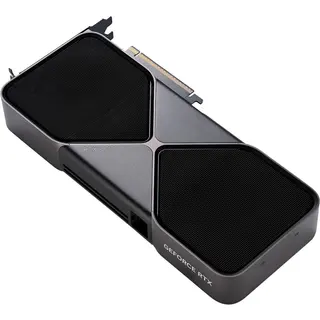
GeForce RTX 5090 Founders Edition 32GB GDDR7
- 32 GB GDDR7
- 304 mm
- 2 slots
$3,999.99 ≈ 0.05247 BTC
Free EU shipping
NVIDIAIn stock · 1 per order
GeForce RTX 4090 Founders Edition 24GB GDDR6X
- 24 GB GDDR6X
- 304 mm
- 3 slots
$2,899.99 ≈ 0.03804 BTC
Free EU shipping
NVIDIAIn stock · 1 per order
GeForce RTX 3090 Ti Founders Edition 24GB GDDR6X
- 24 GB GDDR6X
- 313 mm
- 3 slots
$1,799.99 ≈ 0.02361 BTC
Free EU shipping
$759.99 ≈ 0.009968 BTC
Free EU shipping
$1,199.99 ≈ 0.01574 BTC
Free EU shipping
$1,739.99 ≈ 0.02282 BTC
Free EU shipping
$809.99 ≈ 0.01062 BTC
Free EU shipping
$1,229.99 ≈ 0.01613 BTC
Free EU shipping
$899.99 ≈ 0.0118 BTC
Free EU shipping
$1,669.99 ≈ 0.0219 BTC
Free EU shipping


Processors
See all$359.99 ≈ 0.004722 BTC
Free EU shipping
$349.99 ≈ 0.004591 BTC
Free EU shipping
$539.99 ≈ 0.007083 BTC
Free EU shipping
$329.99 ≈ 0.004328 BTC
Free EU shipping
$739.99 ≈ 0.009706 BTC
Free EU shipping
Intel In stock
Core Ultra 7 270K Plus CPU 24 Cores 5.5 GHz Socket 1851 Arrow Lake Boxed
- 24C / 24T
- 5.5 GHz
- LGA1851
$279.99 ≈ 0.003672 BTC
$269.99 ≈ 0.003541 BTC
$169.99 ≈ 0.00223 BTC
Intel In stock
Core Ultra 9 285K 24-Core 5.7 GHz Socket 1851 Boxed Without Cooler
- 24C / 24T
- 5.7 GHz
- LGA1851
$459.99 ≈ 0.006033 BTC
Free EU shipping
$129.99 ≈ 0.001705 BTC


Keep reading
All guidesHow to buy PC hardware with Bitcoin safely (2026 guide)
Yes, you can buy graphics cards, processors and complete PCs with Bitcoin, and the process takes a few minutes of your time plus the network confirma…
Updated
Graphics card buying guide 2026: RTX 50 vs RX 9000 vs Arc
For most gamers in 2026, the right graphics card is the one matched to your monitor: 1080p, 1440p or 4K decides the tier, and VRAM decides how long i…
Updated
CPU buying guide 2026: Ryzen 9000 vs Intel Core Ultra 200S
The right processor depends on what you do most: for gaming, AMD Ryzen 9000 X3D chips lead this generation, while for multi-core work both Ryzen 9000…
Updated


